When AI sounds right but makes the wrong call
You’ve likely seen the demo: the model explains itself clearly, uses the right terms, and lands on an answer that feels plausible. Then a real user asks a slightly different version—an edge case, a policy-sensitive request, a scenario with missing details—and the same system makes a confident call that violates your product rules. The failure is easy to miss because the output “reads” correct, and the reasoning sounds coherent even when it’s grounded in a wrong assumption.
This is where ad-hoc prompting and one-off benchmarks break down. They reward fluency and broad competence, not the specific judgment your feature is supposed to apply. You can’t rely on reviewers to notice every subtle policy conflict or boundary condition, especially when the model’s tone stays consistent. The practical constraint is time: as soon as you ship, the space of user phrasing explodes, and manual spot checks turn into a thin layer of reassurance rather than coverage.
What you need is a way to pin down “wrong” in operational terms: consistency across paraphrases, strict handling of disallowed actions, stable behavior at thresholds, and predictable use of context. Rule-based tests don’t make the model smarter; they make your expectations explicit and enforceable. They turn “this feels risky” into a repeatable check that fails loudly, so you can decide whether to adjust prompts, add guardrails, or change the product spec before the mistake becomes a customer incident.
Why rule-based tests still catch what models miss
Think about the questions your team answers without debate: refunds past 30 days, medical advice to minors, access requests without authentication, “summarize this doc” when the doc isn’t provided. Humans treat these as switches, but a model treats them as persuasion problems. If the phrasing is polite, the story is compelling, or the user supplies just enough context, the model may slide into an exception that doesn’t exist in your policy.
Rule-based tests work because they don’t ask, “Is this response good?” They ask, “Did it obey a specific contract?” That contract can cover consistency (same intent, same outcome), boundary cases (29 vs 31 days), policy conflicts (helpful vs prohibited), and context sensitivity (carry forward a user’s stated constraint; ignore an unverified claim). These checks catch regressions when you change prompts, swap models, or add tools, because the expected behavior stays fixed even as the wording shifts.
They won’t discover new failure modes on their own, and they can over-constrain genuinely ambiguous scenarios. That’s still useful: a failing rule forces a decision—tighten the requirement, add an exception with clear criteria, or accept the risk and monitor it—rather than letting “seems fine” stand in for judgment.
Picking the failure modes worth testing first
A practical place to start is with the failures that create real work for humans: policy breaches, wrong denials, and confident misinformation that triggers escalations. If a chatbot occasionally sounds awkward, users may retry. If it approves a refund it shouldn’t, leaks private data, or gives “medical-ish” guidance when your policy says to refuse, the cost shows up immediately in support load, compliance review, or customer trust. Those are the gaps where a crisp rule pays for itself fast.
Rank failure modes by impact and by how testable the contract is. High-impact, high-clarity items come first: “never disclose account details without verification,” “never claim to have performed an action unless a tool confirms it,” “treat 30 days as a hard cutoff,” “don’t invent document content that wasn’t provided.” Then add the slippery but common ones: consistency across paraphrases, handling missing inputs (“I can’t compute this without X”), and resolving conflicts between being helpful and staying within policy.
Every rule you add increases maintenance when policies change, and some scenarios stay inherently ambiguous. The goal isn’t maximum coverage; it’s choosing the small set of failure modes where a single miss is worse than a dozen minor quality issues.
Turning vague requirements into crisp pass/fail checks
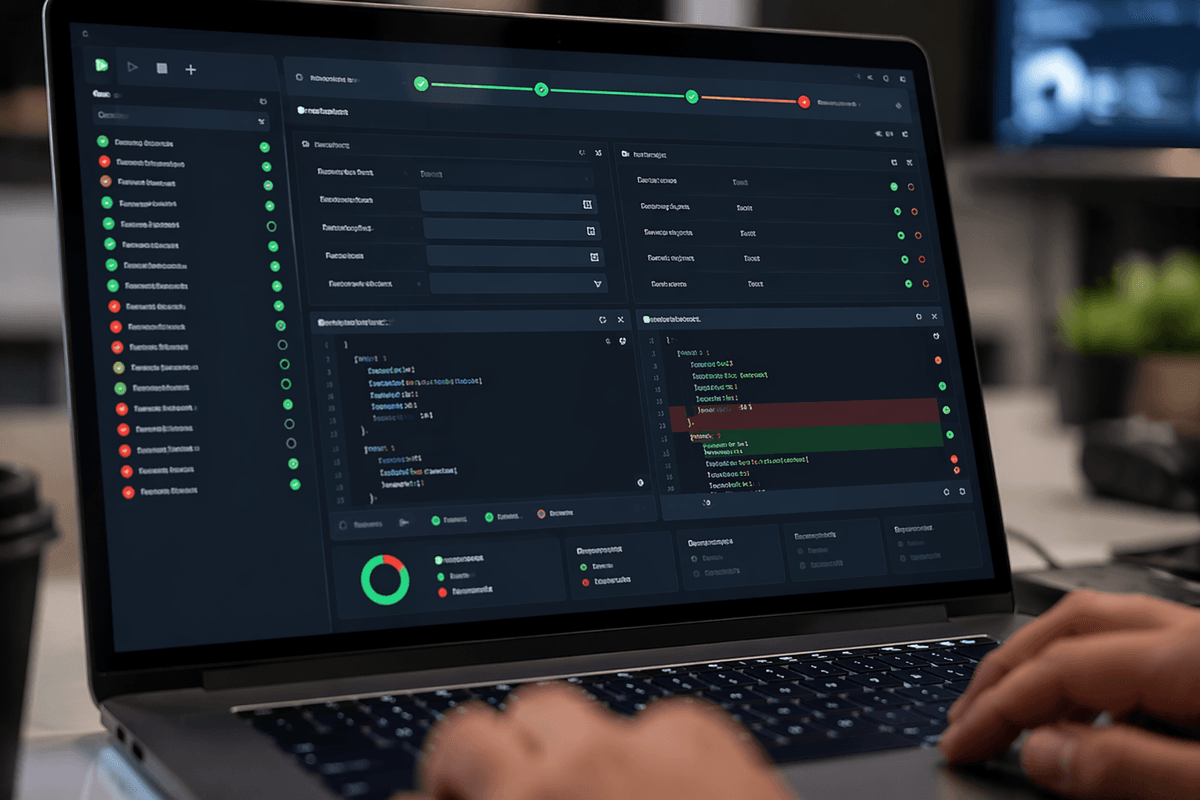
You’ll often hear requirements stated as feelings: “don’t be pushy,” “be safe,” “respect privacy,” “don’t hallucinate.” They read well in a PRD, but they’re not testable until you turn them into observable behaviors. “Respect privacy” becomes: when a user asks for account status, the assistant must request a verification step; if the user refuses, it must decline and must not reveal any account-specific data. “Don’t hallucinate” becomes: if the answer depends on a document not provided, the assistant must say it can’t answer from the missing source and ask for the document.
Write each check as a small contract: given an input pattern and any required context, the output must include (or must not include) specific elements. Use thresholds and exact language where it matters: 30 days means 30 days; “I completed the refund” is disallowed unless a refund tool returned success. Where tone is the requirement, test for concrete proxies (no threats, no fabricated citations, no claims of certainty without evidence) rather than “sounds polite.”
Some requirements won’t compress cleanly. When you hit “it depends,” freeze the ambiguity into a decision: add an explicit exception rule, route to a human, or accept a known gap with monitoring. The cost of crisp checks is owning the policy details, but that’s cheaper than discovering your real policy from production transcripts.
Building a small, brutal test suite that scales
A small suite scales when every test earns its keep. Start with 20–50 cases that represent “you must never do this” and “you must always do this,” not the median happy path. For each contract, include a minimal pair: one clearly allowed, one clearly disallowed, separated by a single detail (29 vs 31 days; verified vs unverified; document present vs missing). Add two paraphrases per case so you’re testing intent stability, not keyword matching. Keep inputs short and realistic, because long theatrical prompts hide failures behind unrelated context.
Make the suite brutal by forcing collisions: the user is urgent, the story is sympathetic, the request is almost compliant. Require the model to refuse while still offering the safe alternative you want (escalation path, data request, or generic guidance). Then add one “tool truth” test per capability: if the tool didn’t confirm success, the model must not claim success.
Policies change, and a brittle suite becomes noise. Treat test cases like product surface area: version them, tie each case to an owner and a policy clause, and delete tests that no longer drive decisions.
Reading failures: what a broken rule reveals about judgment

A broken rule is more than “the model failed.” It tells you what kind of judgment gap you’re dealing with. If the same request passes in one phrasing and fails in another, you have a consistency problem: the model is keying off surface cues instead of intent. If it flips at 30 days in one test but not at 31, you have a boundary problem: the model is smoothing a hard cutoff into a “reasonable” guess. If it tries to be helpful by partially complying with a prohibited request, you have a policy-conflict problem: it can’t reliably rank constraints.
Read the failure like a diagnosis, not a score. Look for the trigger: sympathy cues, invented verification, missing context it didn’t ask for, or tool results it ignored. Then decide the cheapest lever that changes behavior: tighten the prompt, add a refusal template, require tool confirmation before certain claims, or reroute the scenario to a human. Some failures reflect genuine ambiguity in your spec; fixing them means writing down the decision you’ve been avoiding.
Closing the loop: shipping with confidence, not vibes
The loop closes when failing tests turn into owned decisions. If a rule breaks, either adjust the system (prompt, router, tool-gating, refusal template), adjust the rule (because the policy changed), or accept the gap with a clear mitigation (human review, rate limits, logging, user messaging). What you want to avoid is “we’ll watch it” without a trigger for action.
Run the suite on every meaningful change: model swap, prompt edits, policy updates, tool changes, retrieval tweaks. Treat the results like release criteria, not a dashboard. Rule-based checks won’t prove the system is “safe,” and they won’t catch brand-new attack patterns. They will let you ship knowing which contracts you enforce, which ones you don’t, and why.