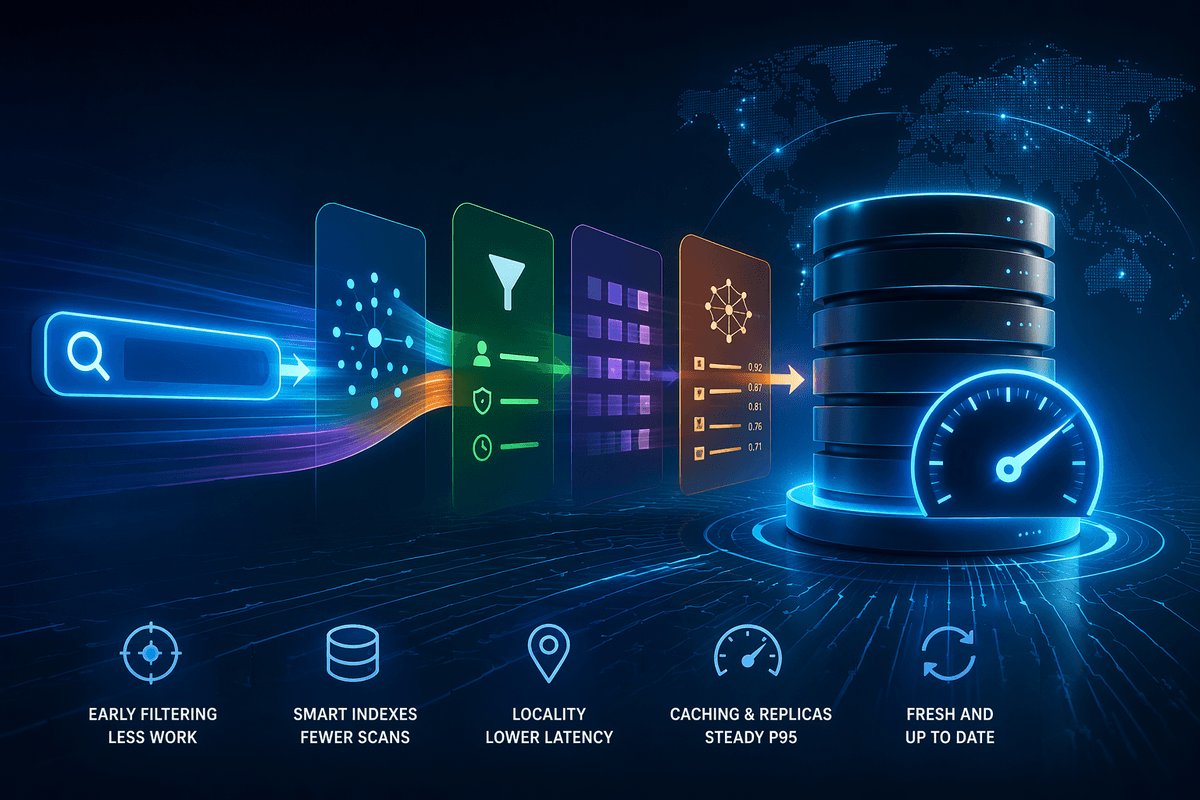
Why “learning” feels different once AI is everywhere
You can feel it in small moments: a homework problem you used to wrestle with now yields in seconds, or a work task that once proved you “knew your stuff” looks like something a chatbot can draft. That shift makes learning feel less like collecting answers and more like staying oriented—knowing what to ask, what to trust, and what still matters when the first draft is cheap.
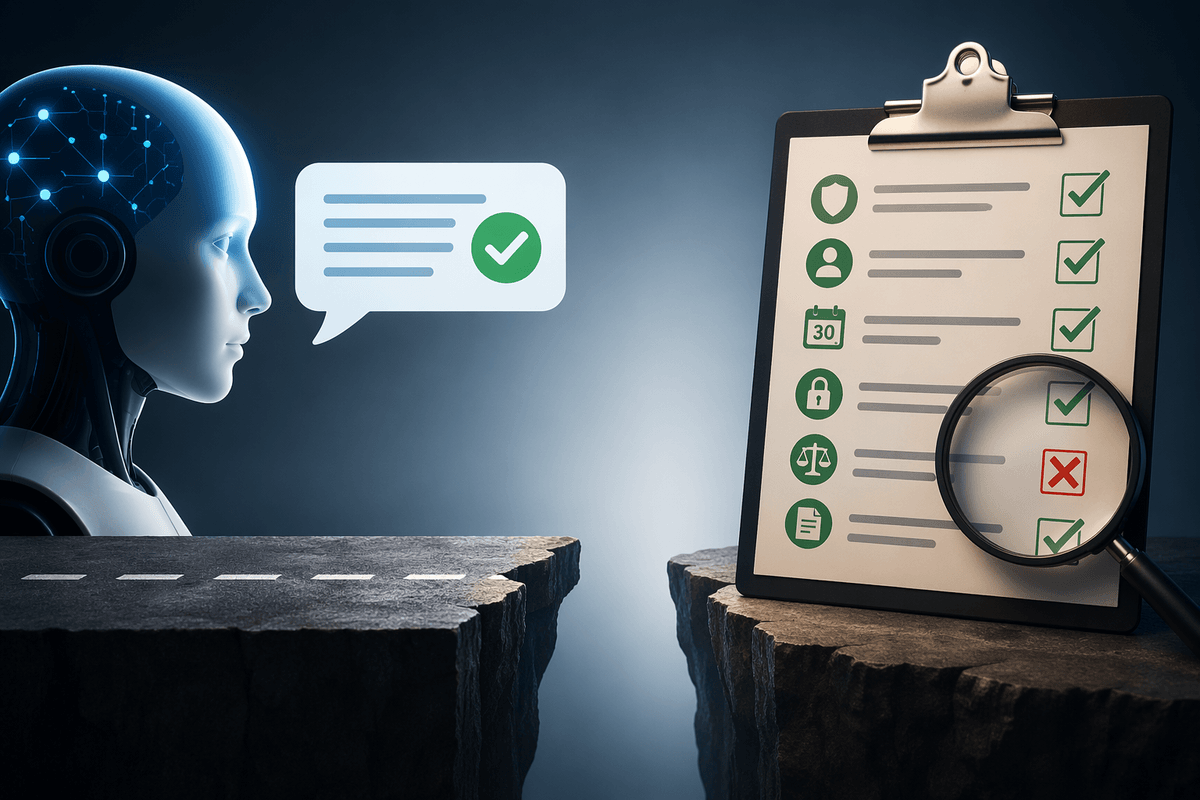
AI compresses the time between “I don’t know” and “I have something,” which is convenient but also disorienting. When outputs arrive instantly, it’s easy to mistake fluency for understanding, or to stop at a plausible response. The real cost shows up later: weak mental models, brittle skills, and mistakes you can’t spot because you didn’t build the habit of checking.
That’s why the most valuable learning now often happens after the AI responds. You learn by tightening the problem, testing the result against reality, and comparing alternatives until you can explain the choice to another person. The goal isn’t to compete with AI at speed; it’s to use speed to run more reps while keeping your own judgment in the loop.
Stop chasing tools: decide what you want AI to help with
You open a feed and there’s a new model, a new plugin, a new “AI course.” The temptation is to keep shopping for the one tool that will finally make you productive. But most people don’t have a tool problem; they have a goal problem. If you can’t name the work you want help with, you can’t tell whether a shiny feature is useful or just novel.
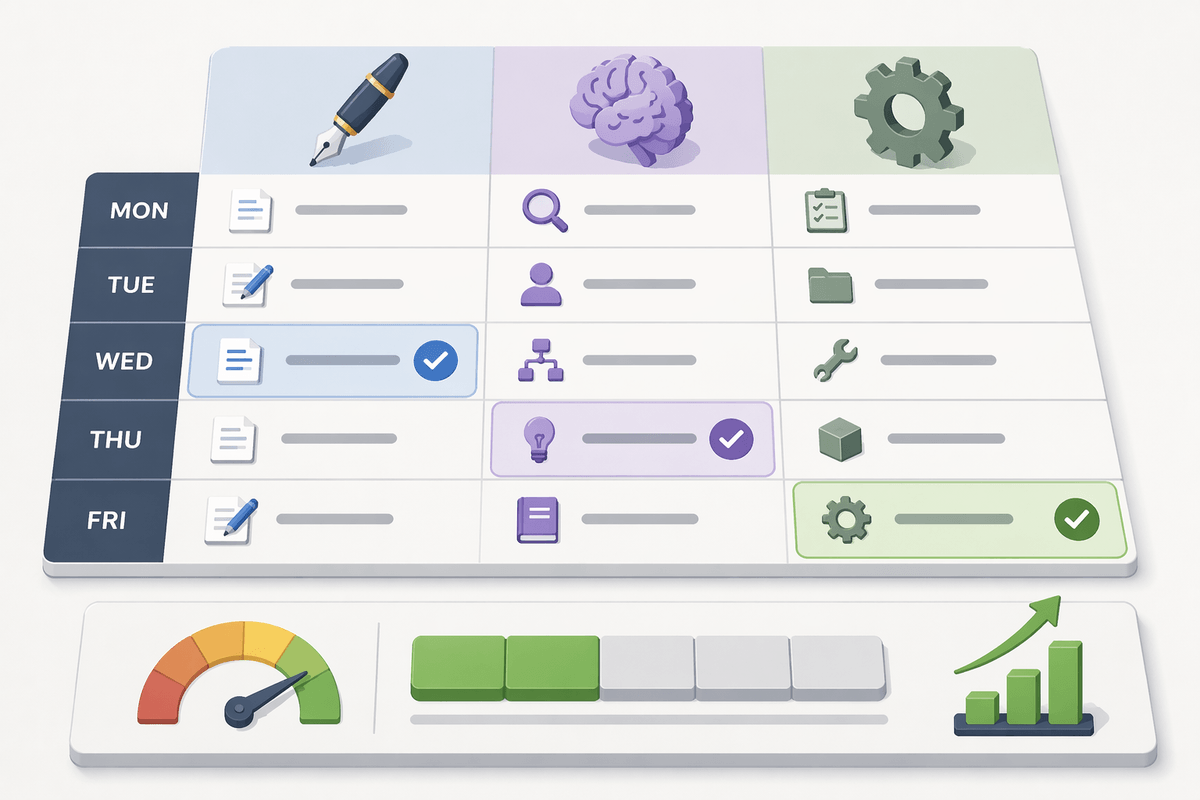
Start with three buckets from your actual week: writing (emails, reports, essays), thinking (planning, analyzing, studying), and doing (spreadsheets, code, slide edits). Pick one repeated task per bucket and define what “better” means: faster first draft, fewer mistakes, clearer structure, more options to choose from. Then test AI against that yardstick, not against hype. A limitation you’ll hit quickly is setup overhead—prompts, context, and review time can erase the speed gains—so choose tasks where you can reuse a template and where checking is straightforward.
When a new tool shows up, run a simple filter: does it improve one of those repeatable tasks by at least 20% without adding risk you can’t manage? If not, skip it. Staying selective is how you keep learning moving forward instead of turning into endless tool maintenance.
The new basics: prompt thinking, verification, and data sense
A common experience with AI is receiving an answer that sounds convincing but turns out to address a different question from the one that was actually intended. Better results usually begin with a better brief. Define the objective, identify the audience, explain the constraints, and describe what a successful outcome should look like. Asking the model to state its assumptions before answering—and to provide several approaches with their trade-offs instead of a single conclusion—helps keep the discussion aligned with the real task.
Verification is what turns an AI response from something interesting into something dependable. Rather than treating the output as finished work, treat it as a draft that still needs evidence. Check a few important claims against trusted sources, recalculate part of the result independently, or verify figures, quotations, and policy references directly. Not every aspect requires the same level of scrutiny. Numbers, official requirements, and factual statements deserve routine verification, while tone, organization, and wording often need only editorial review. Choosing where to spend that effort keeps review costs under control without increasing unnecessary risk.
Equally important is recognizing what information the model does not have. Conclusions become difficult to trust when the source of the numbers is unclear, the time period is unspecified, or basic terms remain undefined. Before accepting a recommendation, ask for the underlying inputs, the definitions being used, and a concise summary of the assumptions supporting the answer. Once those pieces are visible, it's much easier to judge whether the conclusion reflects the available evidence or simply fills in missing details with plausible-sounding guesses.
Working with AI day-to-day without losing your own skills
You see the trade-off on an ordinary afternoon: you can let AI write the email, summarize the reading, and draft the analysis, and you’ll finish faster—but you’ll also stop practicing the parts that make you effective when the draft is wrong or the situation is novel. The fix isn’t “don’t use it.” It’s choosing which steps you keep manual so your brain stays in the loop: outline before you generate, do the first pass of reasoning yourself, or write the final recommendation in your own words after reviewing options.
Build small “skills checkpoints” into tasks you already do. For a report, force a one-paragraph hypothesis before you ask for help, then have the model critique your logic and list missing evidence. For studying, try this pattern: attempt two problems without AI, use AI for hints (not full solutions), then redo the same problems from scratch the next day. This costs time, and on tight deadlines you’ll sometimes skip it—so reserve the full routine for high-leverage work where mistakes are expensive.
Keep one personal metric that rewards understanding, not output: “Could I explain this decision to a teammate without the chat log?” If the answer is no, slow down and rebuild the reasoning until it’s yours.
Build a personal learning loop that survives rapid change

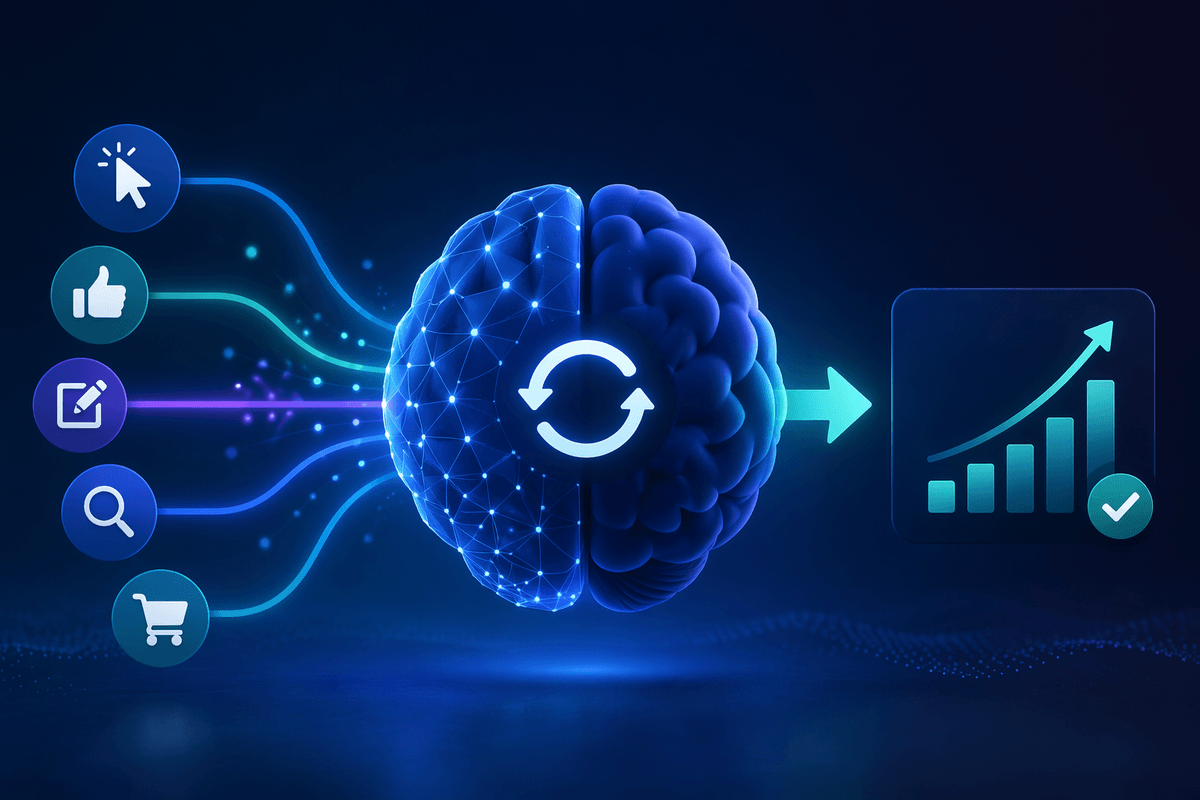
You notice the problem when you try to “keep up” for a month and end up with scattered notes, half-finished courses, and no change in how you work. A learning loop that survives rapid change is smaller and repeatable: one target skill, one real task, one quick test, one reflection. Think of it like a weekly maintenance routine, not a reinvention.
Pick a recurring deliverable you already produce—lab write-ups, client updates, code reviews, slide decks. Run a short experiment each week: change one variable (a prompt template, a verification checklist, a data source you trust) and compare the output against a simple baseline: time to first draft, number of edits, error rate, clarity feedback. Keep the record lightweight or you won’t sustain it; a single note with “what I tried / what broke / what I’ll reuse” is enough.
Make “proof” part of the loop, not an afterthought. Save a small set of reference examples (good past work, rubrics, trusted documents) and force AI outputs to match them. The constraint is real: thorough checking takes time, so decide in advance which parts always get verified (numbers, citations, policies) and which get a quick sanity pass.
Double down on what AI can’t easily replace: domain and judgment
Many people recognize the same moment: an AI-generated draft reads smoothly and looks almost finished, yet something still makes them pause before sending it. That instinct is usually the result of domain expertise rather than caution alone. The professionals who remain indispensable are rarely the fastest at producing content. Their value comes from recognizing what a correct answer looks like within their field—what falls inside normal practice, what introduces unnecessary risk, what reviewers are likely to reject, and which critical pieces of information are still absent.
That expertise is built on practical pattern recognition. Experienced practitioners know which inputs deserve attention, which edge cases appear repeatedly, and which constraints cannot be compromised, whether they involve budgets, safety requirements, regulations, ethics, or delivery deadlines. Judgment builds on that foundation by deciding what requires verification, what can safely be ignored, what should be escalated, and when an impressive-looking result is still fundamentally wrong. AI is an effective tool for generating alternatives and accelerating exploration, but responsibility for the final decision—and its consequences—remains with the person using it.
The most durable investment is knowledge that strengthens evaluation rather than generation. Reading primary sources, maintaining a collection of trusted reference examples, and documenting personal decision rules all make it easier to assess future outputs with confidence. Developing that expertise is slower than chasing the latest tools, and its benefits are less visible in the short term. Over time, however, it compounds: every new model becomes easier to use effectively, and subtle mistakes become much easier to recognize before they reach someone else.
A simple 30-day plan to start, measure, and adjust
Pick one recurring task you care about (a weekly memo, a problem set, a lab report) and run a 30-day cycle. Days 1–3: capture a baseline—time to finish, typical errors, and one example you’re proud of. Days 4–10: build one reusable prompt template plus a short verification checklist (facts, numbers, sources, policy). Days 11–20: do ten reps; keep AI on, but write the outline and final recommendation yourself. Days 21–27: tighten based on failures. Days 28–30: re-run the baseline and compare.
If the gains aren’t clear, don’t add tools—change one variable. Cut the task size, pick a stronger reference example, or reduce verification to the highest-risk items so the overhead doesn’t cancel the benefit. The goal is a routine you can keep while deadlines keep coming.