Why “natural learning” suddenly matters to AI builders
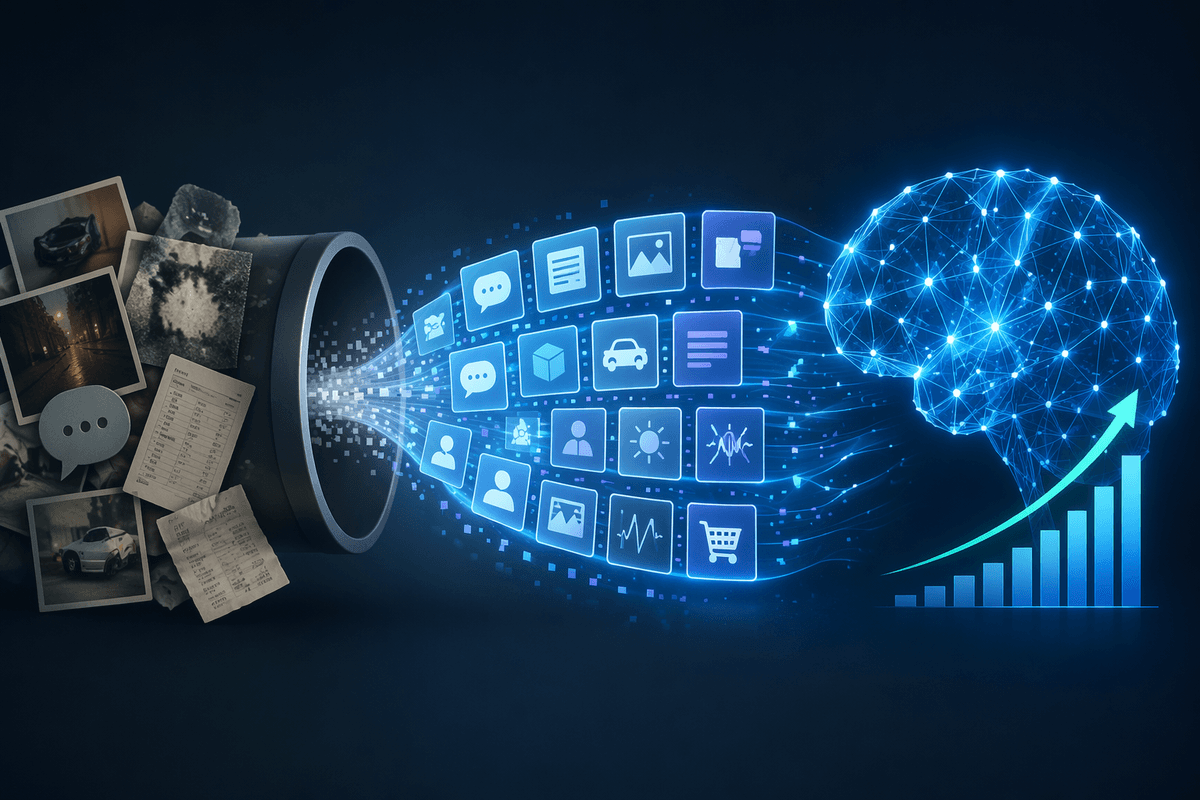
A familiar pattern has set in: you can get a model to “work” on a benchmark, then spend weeks chasing edge cases, labeling more data, and paying for bigger training runs. That workflow is starting to look brittle as products move into messy settings—devices, warehouses, hospitals, customer support—where inputs drift and long-tail behaviors matter. “Natural learning” is a shorthand for what biology does well: learn from sparse feedback, adapt continually, and stay stable under noise.
The appeal isn’t philosophical; it’s economic and operational. If a system can learn from observation, recover from distribution shifts, and run with tighter energy budgets, you change what’s feasible at the product level. Many bio-inspired claims are hard to test cleanly: they may trade accuracy for efficiency, require specialized hardware, or rely on benchmarks that don’t match your failure modes.
What biology does differently from today’s neural networks

Watch how a person learns a new task at work: they pick up the goal from context, try a few moves, notice what changes, and gradually build a habit. Most deep networks don’t learn that way. They’re typically trained in a separate phase, on a fixed dataset, with a single objective, then “frozen” for deployment. Biology is always online, constantly updating from streams of experience, and it has to stay functional while it learns.
Brains also lean on structure that mainstream models often treat as optional. Learning is local and credit assignment is messy; updates depend on nearby activity, timing, and modulatory signals rather than global backpropagated gradients. Memory is layered too: fast, fragile traces coexist with slower consolidation, which helps separate “what just happened” from “what usually happens.” None of this is free. Biological efficiency comes from constraints—limited energy, noisy sensors, and strict latency—which means brain-like mechanisms can add engineering complexity and still underperform on clean, static benchmarks.
Which brain-inspired mechanisms show up in real models
In practice, “brain-inspired” usually means borrowing specific mechanisms, not rebuilding a cortex in silico. Attention is a clear example: it echoes how perception prioritizes a subset of signals, and in modern models it becomes a concrete interface for routing computation and combining context. Gating and recurrence show up the same way. LSTMs, GRUs, and modern state-space or recurrent hybrids mimic the idea that a system can keep a working state, update it selectively, and avoid overwriting useful information every step.
You also see memory systems that look more like “fast recall plus slow learning” than a single monolithic network. Retrieval-augmented generation, kNN-style caches, and episodic replay buffers can be read as engineered analogs of hippocampus-like lookup paired with slower consolidation in the main model. On the learning side, local or constrained updates appear in a few places: contrastive objectives, Hebbian-style associative rules in small components, and reinforcement learning’s reward signals as a blunt “dopamine-like” scalar rather than dense labels.
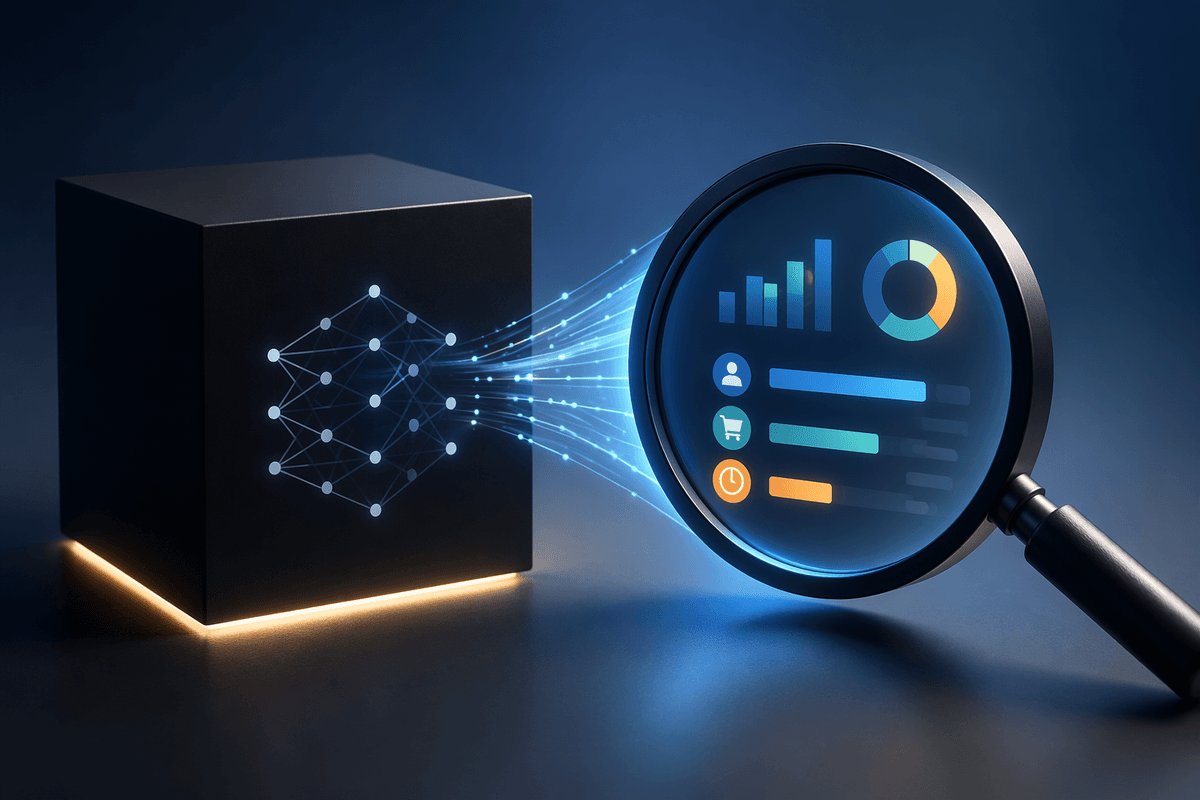
They add moving parts (retrievers, memories, replay, state) that must be tuned, monitored, and secured, and they can fail in ways static feedforward models don’t—like stale memories, feedback loops, or brittle behavior when the environment changes faster than the consolidation process can track.
Spiking and neuromorphic approaches: efficiency or extra complexity?
Consider an always-on device—an earbud, a drone, a factory sensor—where most of the time nothing important happens, yet your model still burns power because it computes every layer on every timestep. Spiking neural networks flip that default: neurons communicate with discrete “spikes,” and compute is more event-driven. When inputs are sparse or change slowly, you can skip a lot of multiply-add work and potentially cut latency and energy, especially when paired with neuromorphic hardware designed for that style of computation.
The tension is that efficiency claims often assume the whole stack is built around spikes. Training is still the hard part. Many spiking systems rely on surrogate gradients or conversions from standard networks, which can narrow the gap to conventional deep learning rather than replace it. Tooling, debuggability, and deployment pipelines are also less mature, and accuracy on mainstream vision/language benchmarks is not automatically competitive.
Where it can be worth it is when power, heat, or real-time response is the product constraint and your data is naturally temporal—audio, radar, event cameras, physiological signals. Otherwise, neuromorphic approaches can become a hardware and engineering commitment without a clear end-to-end advantage.
Learning without labels: bio-inspired routes to self-supervision
Think about how people learn a new room or a new tool: nobody hands them a labeled dataset. They watch what tends to co-occur, what changes after an action, and what stays stable. A lot of “bio-inspired” self-supervision is basically that idea made concrete. Predictive learning trains a model to guess the next sensory state (or missing parts of the current one), forcing it to build useful internal structure. Contrastive learning does something similar by pulling together different “views” of the same underlying event and pushing apart unrelated ones, which echoes the brain’s reliance on consistent cues across time and context.
The product-level benefit is reduced dependence on expensive labels and better leverage of logs, video, audio, and telemetry. The self-supervised objectives can drift away from what you actually care about; you can learn features that are easy to predict but irrelevant for downstream decisions. It also adds compute: pretraining on raw streams may be cheaper than labeling, but it still costs time, GPUs, and careful evaluation on real tasks.
Robustness and continual learning: avoiding the “forgetting” trap
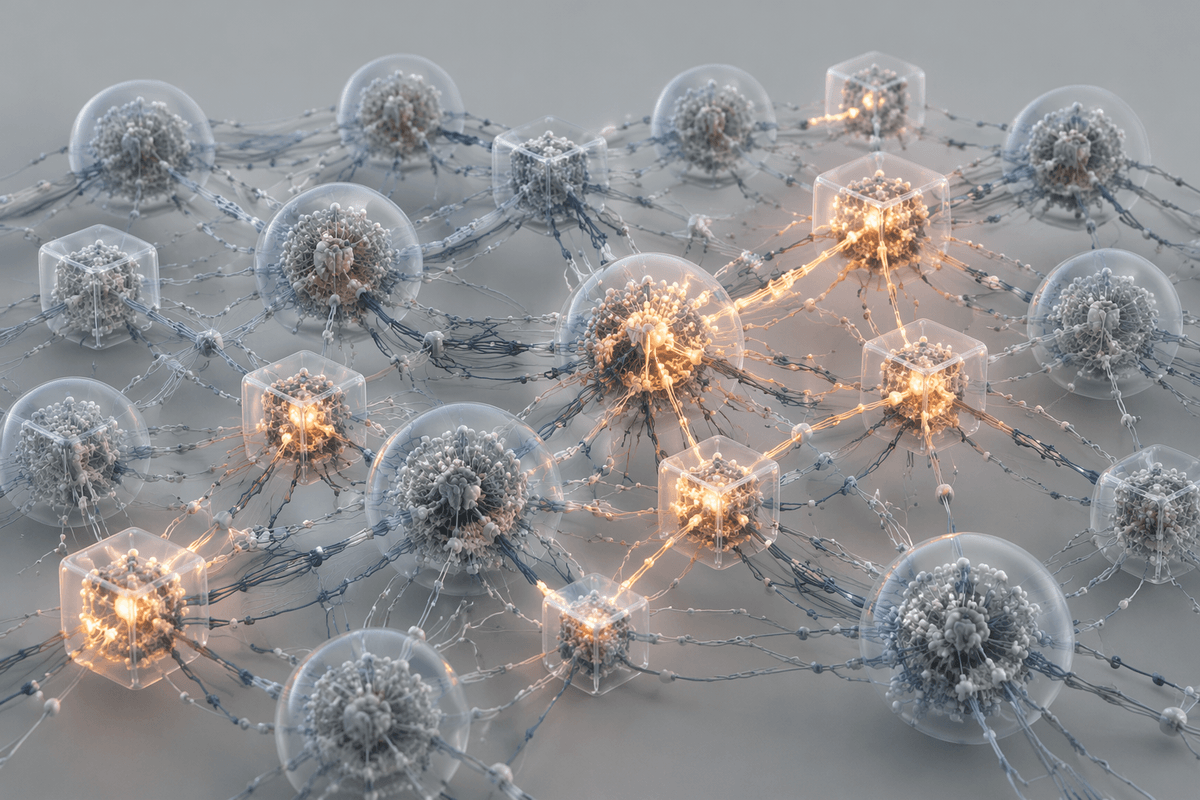
A common failure shows up once a model leaves the lab: it improves on the new data you collected last week, then quietly gets worse on last month’s core cases. Standard fine-tuning encourages that trade: gradients that fit today’s distribution overwrite weights that encoded yesterday’s patterns. Biology avoids total wipeout by mixing fast adaptation with slower consolidation, and by reactivating older experiences while learning new ones.
Engineered versions of that idea are already practical. Replay buffers and synthetic replay (generating past-like samples) are the simplest: keep rehearsing old tasks while training on new ones. Regularization methods try to “protect” important parameters by penalizing changes, while modular or sparse routing tries to confine updates to a subset of the model. External memory and retrieval can also shift the burden from rewriting weights to adding new, queryable facts.
None of these are free. Replay costs storage, privacy review, and extra training time; regularizers can slow learning; modularity adds monitoring and failure modes like unused modules. The decision criterion is concrete: if your product sees frequent drift and you can’t afford repeated full retrains, continual-learning mechanisms become an ROI question, not a research hobby.
How to choose a bio-inspired direction for your project
A typical decision point is whether your constraint is data, drift, or deployment. If labels are scarce but raw streams are plentiful, start with self-supervised or predictive objectives, then measure transfer on the specific decisions your product makes. If the pain is regression over time, prioritize replay, retrieval, or parameter-protection methods and track “backward performance” on old slices after each update. If the hard limit is power or latency on-device, investigate event-driven sensors, temporal models, and only then spiking/neuromorphic stacks.
Pick the smallest mechanism that could plausibly move your metric, and demand an ablation that isolates it. Bio-inspired additions often raise operational costs—extra training passes, memory stores, privacy constraints, and harder debugging—so evaluate on your failure modes (shift tests, long-tail slices, update cadence), not just a clean benchmark leaderboard.