Why computing emissions are rising, and why AI changes it
Teams often notice their cloud bill and their sustainability dashboard rising together, even when the business isn’t “using more computers” in an obvious way. The drivers are mundane but compounding: more always-on services, heavier data movement, higher reliability targets, and a growing share of energy spent outside the CPU—cooling, networking, storage, and redundancy. Data centers have also become a larger slice of global electricity use, which means efficiency gains can be outpaced by demand growth.
AI changes the curve because it concentrates spend into a few energy-dense activities: training runs that consume large bursts of power, and inference that scales with user traffic and product features. It also shifts optimization from static rules to adaptive control—choosing smaller models when quality holds, packing work onto the most efficient hardware, and scheduling flexible jobs when the grid is cleaner. Many workloads can’t move in time or location without latency, compliance, or engineering cost.
A useful test for impact claims is whether they specify what changes (model, hardware, scheduling, cooling) and what stays constant (quality, latency, availability). If a vendor can’t name the baseline, the measurement window, and the trade-off they’re accepting, the “percent reduction” is usually marketing, not a program you can run.
What counts as an AI energy program in practice
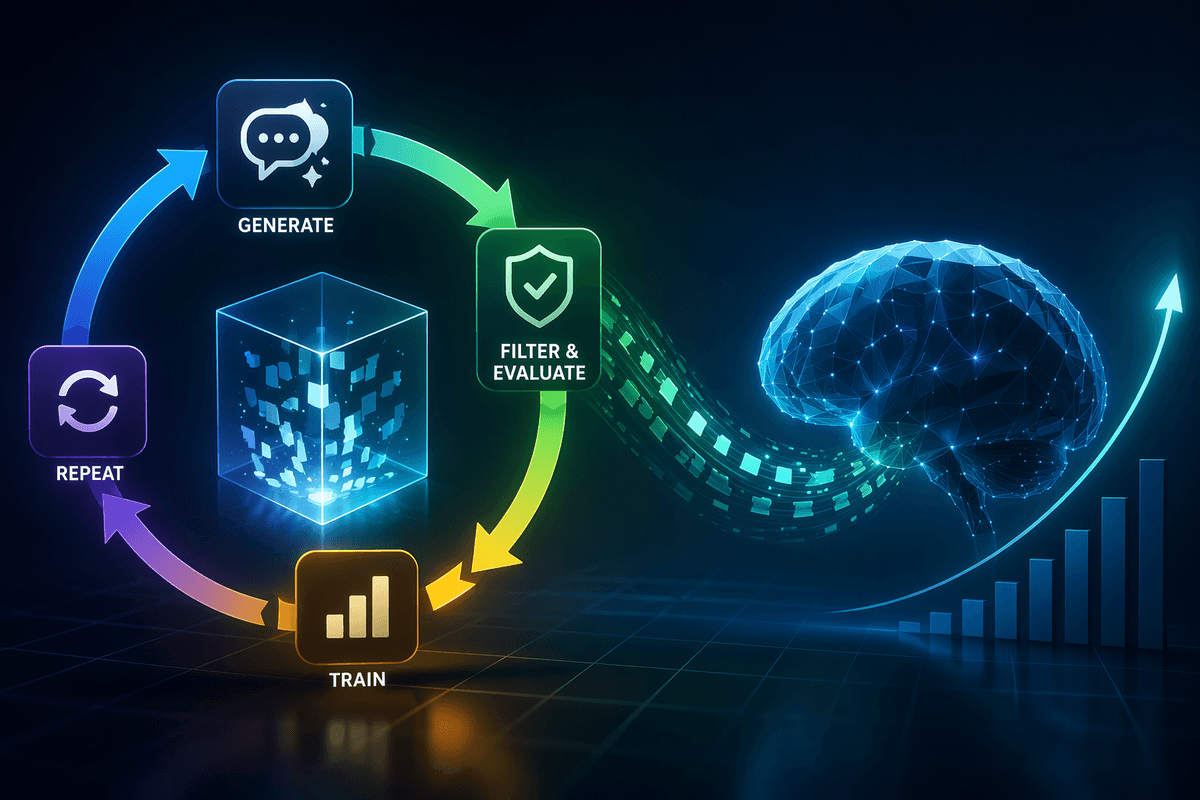
A credible AI energy program is a repeatable operating loop, not a one-off “optimization.” It starts with a defined scope (one product surface, one model family, one cluster), a baseline for cost and carbon, and guardrails for quality and reliability. The “AI” part is typically decision automation: selecting model variants, tuning batch size and precision, or routing requests across hardware types to hit latency while using fewer joules per request.
In practice, programs fall into a few buckets. Workload shaping reduces demand: distillation, caching, quantization, and turning features off when they don’t move outcomes. Workload placement and timing reduce emissions intensity: carbon-aware region selection, shifting batch jobs to cleaner hours, or pausing non-urgent training when prices or grid carbon spike. Facility-side control can matter too—AI-assisted cooling setpoints and airflow tuning—though access is limited in public cloud.
Expect constraints and costs: added telemetry, retraining pipelines, and product risk if quality metrics are weak. If “savings” aren’t tied to an enforced KPI (e.g., watts per 1,000 inferences at a fixed p95 latency), they usually don’t stick.
Measure first: turning workloads into energy and emissions numbers

You can’t manage “AI carbon” from a monthly cloud invoice. Start from work you can count: training job hours, GPU type, average power draw, and inference volume (requests, tokens, or images). Convert that into a simple intensity metric—joules per request or kWh per 1,000 inferences—paired with service guardrails like p95 latency and error rate. For training, track kWh per completed run at a fixed target quality, not “per epoch,” because early stopping and retries change the math.
Emissions add a second layer: multiply energy by the grid emissions factor for where and when the work ran. Hourly factors are more useful than annual averages if you plan to shift timing, but they require clean timestamps and region mapping. Expect messy data at first—shared clusters, opaque cloud telemetry, and model changes mid-quarter—so define a baseline window and freeze the measurement method before you compare options.
Choose your biggest levers: model, hardware, and scheduling
A familiar pattern is that teams debate “green regions” while most of the waste is sitting in plain sight: an oversized model, inefficient serving settings, or jobs running on default hardware because it’s easy. Start with the model lever because it changes every downstream number. Smaller architectures, distilled variants, quantization, and more aggressive caching can cut joules per output sharply, but only if you lock a quality bar (task accuracy, user retention, safety metrics) and measure at the same latency target. The practical cost is engineering time to maintain multiple model tiers and a test harness that catches regressions.
Hardware is often the fastest win when you have choice. Newer accelerators typically deliver more throughput per watt, and many workloads benefit from lower precision (FP16/BF16/INT8) if the model supports it. The constraint is availability and migration effort: kernel changes, driver stacks, and vendor-specific optimizations can turn “just switch instance types” into a quarter-long project.
Scheduling is the lever that makes emissions, not just energy, move. Batchable work—training, indexing, offline scoring—can be queued into cleaner hours, packed to raise utilization, or paused when carbon intensity spikes, while interactive inference usually can’t. Treat it as an SLO trade: you’re buying lower emissions with longer time-to-result or more queuing complexity.
Clean power strategies: cloud regions, PPAs, and hourly matching
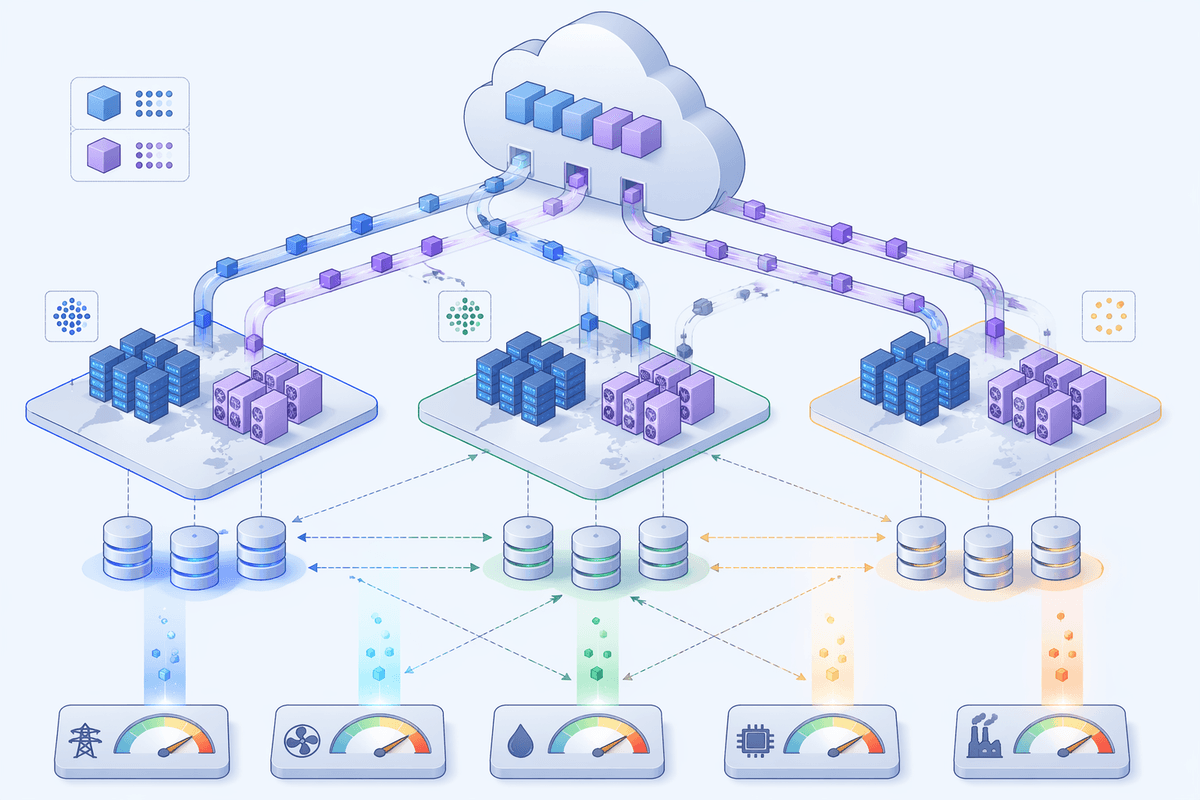
The quickest “clean power” lever most teams can actually pull is location. If your product tolerates a few tens of milliseconds, moving batch jobs—or even a subset of inference—to a region with consistently lower grid intensity can reduce emissions without changing the model. The catch is rarely technical alone: data residency, customer contracts, and incident response expectations can make “just run it elsewhere” a non-starter. Even when you can move, watch the second-order effects: cross-region data transfer, replicated storage, and active-active designs can add energy you didn’t model.
PPAs and renewable energy credits are a different tool: they change what you claim to have purchased, not what the grid delivered at the hour your GPUs ran. They can be valuable for long-term financing and for meeting corporate targets, but they don’t automatically make a 2 p.m. peak inference spike “clean.” That’s where hourly matching matters: align workloads with hours when your contracted or local clean generation is actually producing, then report both the market-based story (contracts) and the location-based reality (grid) so reductions don’t depend on accounting alone.
Operational program patterns that keep savings from slipping
The savings that look great in a pilot often fade when defaults creep back in: a model upgrade ships without re-quantization, a new feature bypasses caching, an ops team adds headroom “just in case,” and utilization drops. Treat energy and emissions like performance: define a small set of enforced guardrails (e.g., kWh per 1,000 inferences at fixed p95 latency; training kWh per run at a target eval score) and fail builds or rollouts when they regress beyond a threshold.
Operationally, the durable pattern is an owner, a cadence, and automation. Assign one accountable team (FinOps + ML platform + sustainability) to review a weekly dashboard, approve exceptions, and keep a backlog of the top regressions. Bake carbon-aware scheduling and region preferences into the orchestrator so engineers can’t “forget” them. Better telemetry costs money, shared clusters blur attribution, and carbon-aware routing can increase cross-region latency or data egress charges if you don’t set tight constraints.
Finally, preserve optionality by standardizing a few “safe” tiers: a smaller default model, a high-accuracy fallback, and a batch window for flexible jobs. When product pressure hits, teams can trade quality and cost consciously instead of quietly paying for energy with no one noticing.
From pilots to policy: reporting, incentives, and next steps
A pilot becomes policy when it changes budgets, roadmaps, and release gates. Report three numbers together: energy intensity (kWh per 1,000 inferences or per training run), service outcomes (quality and p95 latency), and emissions using both location-based and market-based methods. Require a written baseline window, a change log for model and hardware revisions, and an exceptions process so “temporary” overrides don’t become permanent.
Incentives matter because teams optimize what they’re scored on. Put energy and emissions KPIs into FinOps chargeback, SLO reviews, and model-approval checklists. Fund the enabling work—telemetry, benchmarking harnesses, and carbon-aware schedulers—because they’re real costs. A practical next step is a 60–90 day program with one owner, one workload class, weekly regression reviews, and a policy draft that defines guardrails, auditability, and when to scale.