Why everyday reasoning is the best on-ramp to ML
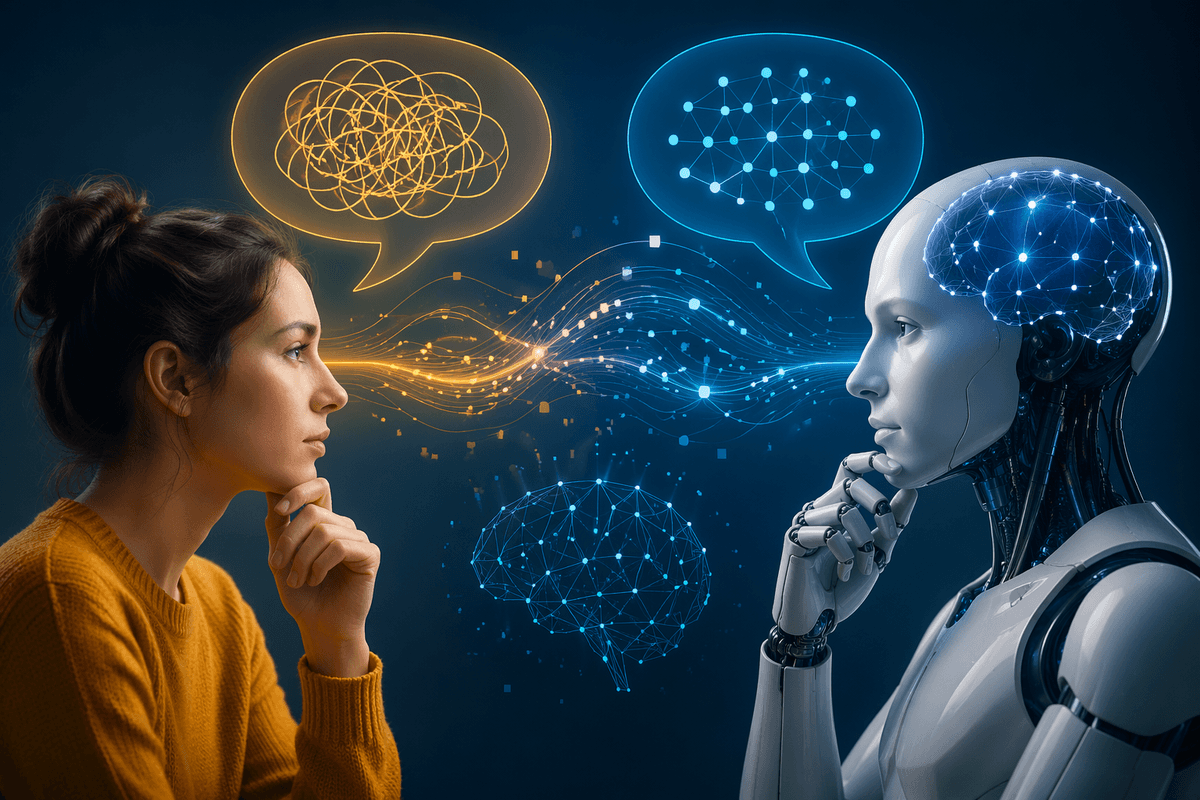
Most people already “do machine learning” in a loose, practical sense: they make predictions, revise them after feedback, and learn patterns from repeated experience. You decide whether to bring a jacket, which email looks urgent, or which route will be fastest—rarely by calculating formulas, but by noticing cues that mattered before.
That everyday reasoning is the best on-ramp because it gives learners something stable to hold onto: choices, evidence, and outcomes. The goal isn’t to pretend ML is just common sense; it’s to use common sense as a scaffold, then show what changes when the stakes rise and you need consistency, documentation, and repeatable results.
Two people can look at the same situation and “feel” different conclusions, and neither can clearly explain why. ML’s promise is not magic accuracy; it’s a disciplined way to record what signals were used, test whether they really help, and understand when the pattern you learned stops working.
Start with familiar decisions, not algorithms and buzzwords

Watch what happens when you ask a room, “Which emails are urgent?” People immediately point to cues: the sender, the subject line, whether a deadline is mentioned, whether it matches an ongoing project. That’s the starting point. If you begin with “neural nets” or “gradient descent,” many learners tune out before they’ve named the decision, the evidence they rely on, and what “right” even means.
A useful activity is to give five short scenarios—spam vs. not spam, safe vs. suspicious link, likely late bus vs. on time—and have learners explain their choice in plain language. Those explanations become the raw material for later ML terms.
The constraint is time: collecting examples and agreeing on what counts as “correct” can be slow, and disagreements are the clue that the problem needs clearer rules or better data.
Turn experience into data: features, labels, and examples
Take those plain-language cues—“known sender,” “mentions a deadline,” “has an attachment”—and treat them like a checklist you can record. In ML terms, each cue becomes a feature: a measurable piece of the situation. The decision you want to learn becomes the label: urgent or not, spam or not, likely late or on time. An example is one row where features describe the case and the label captures the outcome.
It helps to make this tangible: give learners 20 emails (realistic mockups) and a simple table to fill in. Then compare labels and ask where disagreements come from: missing context, vague categories, or inconsistent standards. The practical cost shows up quickly—labeling takes time, and if the labels are messy, the model will “learn” the mess with impressive consistency.
Teach uncertainty early: confidence, probabilities, and thresholds
People rarely feel equally sure about every decision. An email that says “Invoice overdue—final notice” from an unknown sender might trigger suspicion, but not certainty; a message from your manager with “today” in the subject line feels more urgent. That “how sure am I?” instinct maps cleanly to model confidence: not just a class (urgent/not urgent), but a probability-like score that can be compared and discussed.
Thresholds turn that score into action. You might choose “mark urgent” only when you’re very sure, but send borderline cases to a “review” folder. Lowering the threshold catches more truly urgent messages, but it also pulls in more false alarms. In practice, the right threshold depends on cost: missing a real deadline can be worse than interrupting someone with a few extra pings, and some situations need a human in the loop for the uncertain middle.
From rules of thumb to models: what learning changes
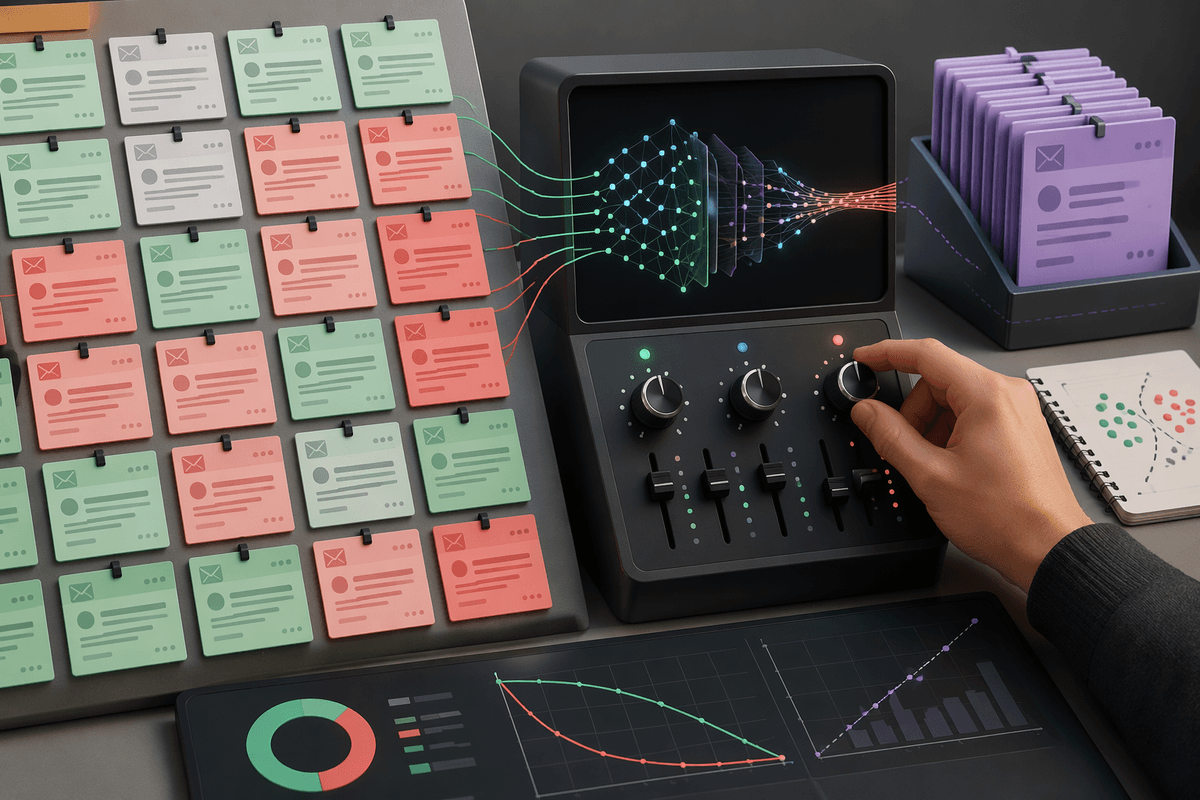
A rules-of-thumb approach sounds like: “If the sender is unknown and there’s an attachment, treat it as risky.” A learned model replaces that single rule with a set of small, tested adjustments: unknown sender might matter a lot, attachments might matter only in certain combinations, and “mentions a deadline” might outweigh both. The shift isn’t from human judgment to math. It’s from hand-picking a few rules to letting evidence decide how much each cue should count.
Training is where those weights come from. You show many labeled examples, and the model tunes itself to reduce mistakes on those examples, then you check whether it still works on new ones. That’s the practical difference: rules are easy to explain, but hard to calibrate; models are easy to calibrate, but harder to explain.
Learning is only as good as the examples you can afford to collect, label, and keep up to date.
Generalization feels like ‘common sense’—and it can fail
Think about how quickly a new teacher “gets” which students are likely to need reminders. After a week, patterns feel obvious, almost like common sense. Models do something similar: they take what worked in past examples and apply it to new ones. When it works, it feels effortless—like the system understands the situation rather than repeating the past.
Generalization breaks when the new cases aren’t really the same. A spam filter trained on last year’s scams may miss a new style of phishing. An “urgent email” model built during a product launch may over-flag everything once the team returns to normal pace. Even small shifts—new terminology, different audiences, a policy change—can turn reliable cues into noise.
A practical classroom move is to hide a few “trick” examples: emails with urgent language that are harmless, or routine messages that carry real deadlines. Learners see that confidence can be misplaced, and that you need fresh data, test sets that match today, and a plan for what happens when the world changes.
Bias and fairness show up in everyday reasoning too
In a group labeling activity, the first bias often appears before any model does: people disagree about what “urgent” looks like, and they lean on shortcuts. If someone writes in a different style, uses fewer exclamation points, or isn’t “known,” their messages may get labeled less urgent even when the deadlines are real. Those labels become the training signal, so the model doesn’t invent unfairness—it can scale and repeat the patterns you handed it.
Fairness questions also hide inside features. “Sender domain” or “time sent” can proxy for job role, shift work, or geography. Removing an obvious sensitive cue doesn’t fix it if other cues stand in for it. The practical constraint is trade-offs: checking performance across groups, collecting the right metadata, and resolving disagreements takes time, and “fairer” behavior can mean accepting a small drop in overall accuracy or adding a human review step for edge cases.
End with feedback loops: evaluating and improving decisions
After you deploy even a simple “urgent email” classifier, the work becomes measurement. Sample a week of decisions, compare them to what actually mattered, and track a few concrete numbers: how many true urgencies you caught, how many false alarms you created, and how many “review” cases humans handled. Then change one thing at a time—add a feature, tighten the label definition, adjust the threshold—and recheck.
The real loop is operational: new scams appear, teams change rhythms, and people adapt to the system. That means ongoing costs for fresh labels, periodic audits for drift and group-wise performance, and a clear plan for when the model should defer to a human. Treat models like policies you revise, not answers you “install.”